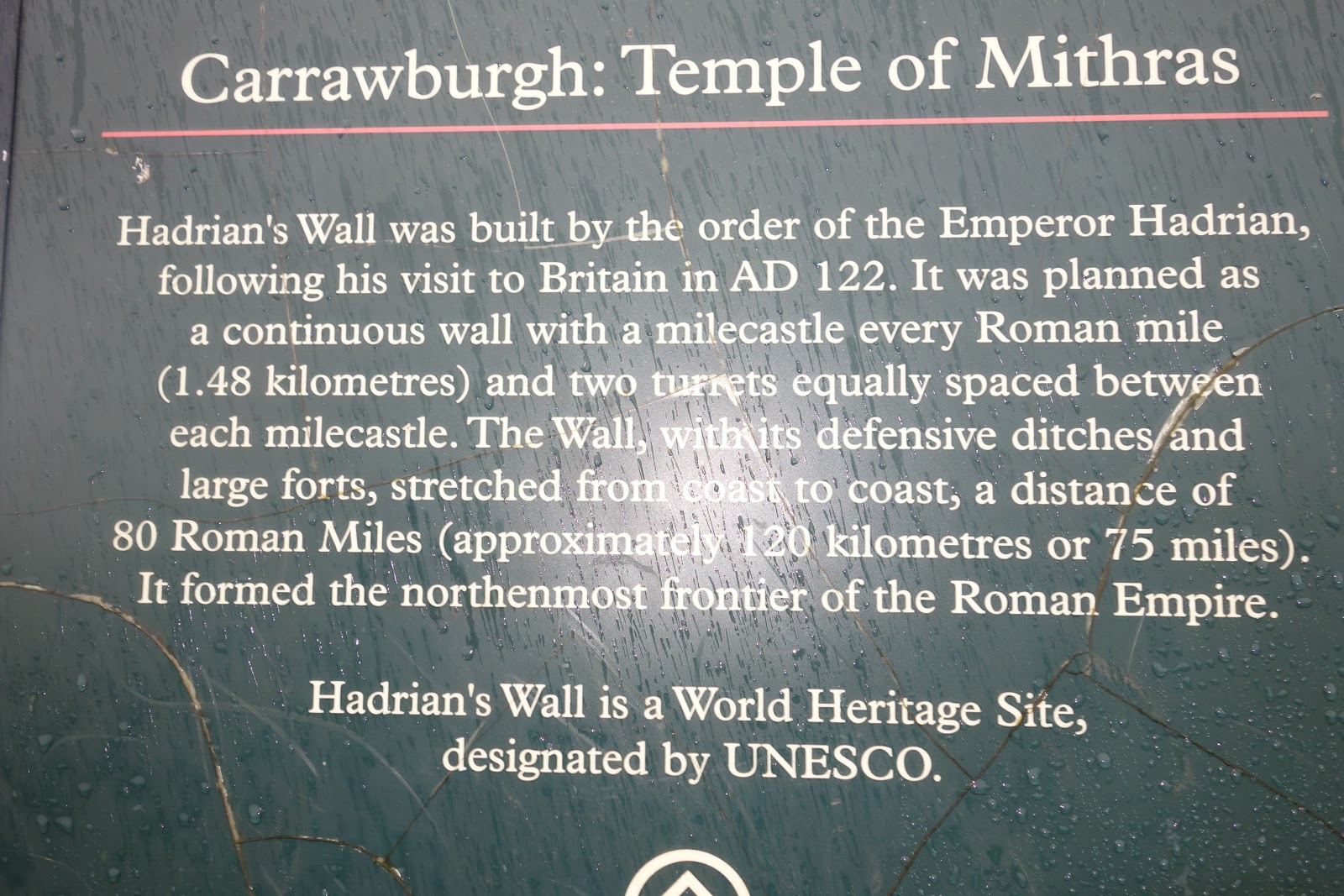
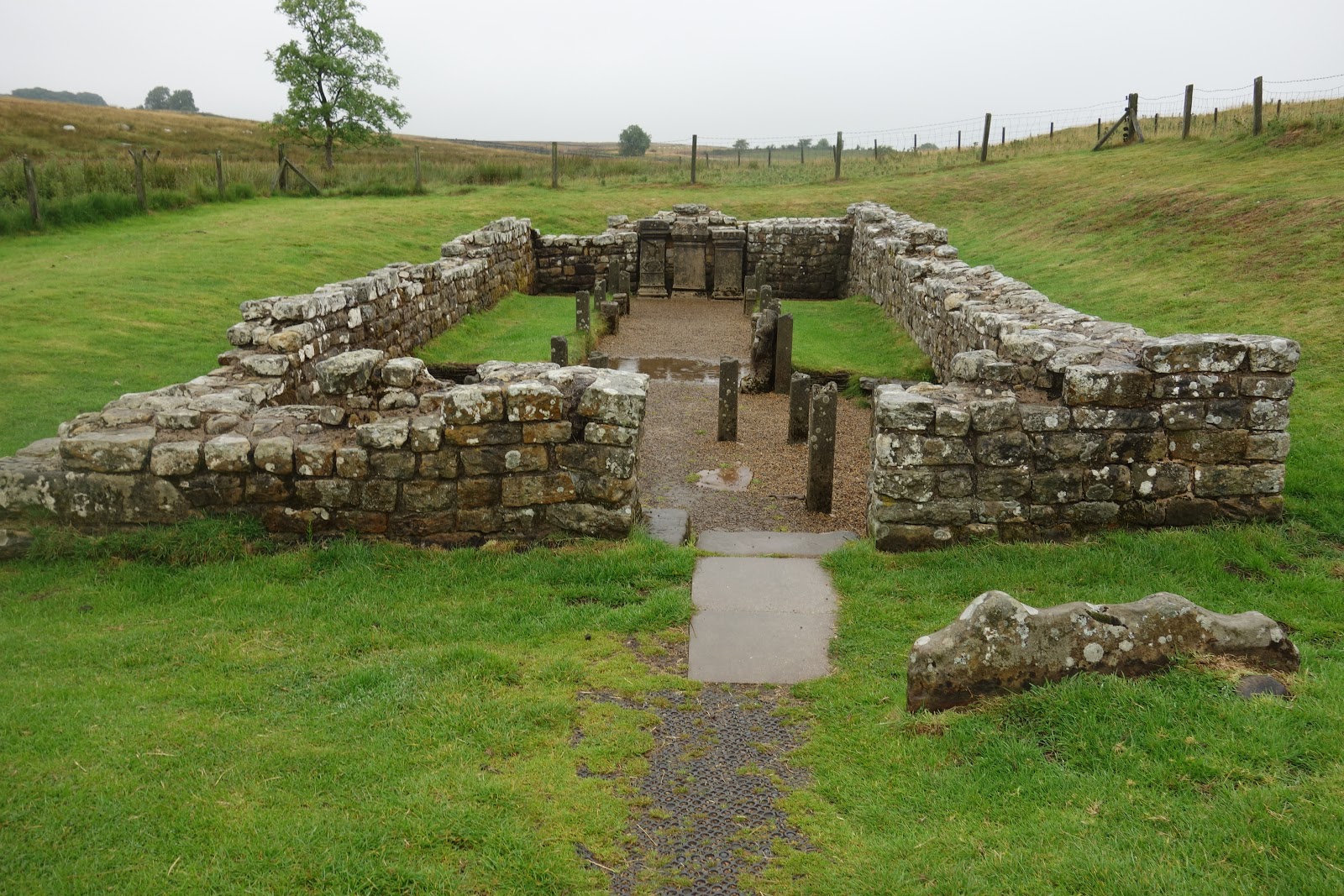
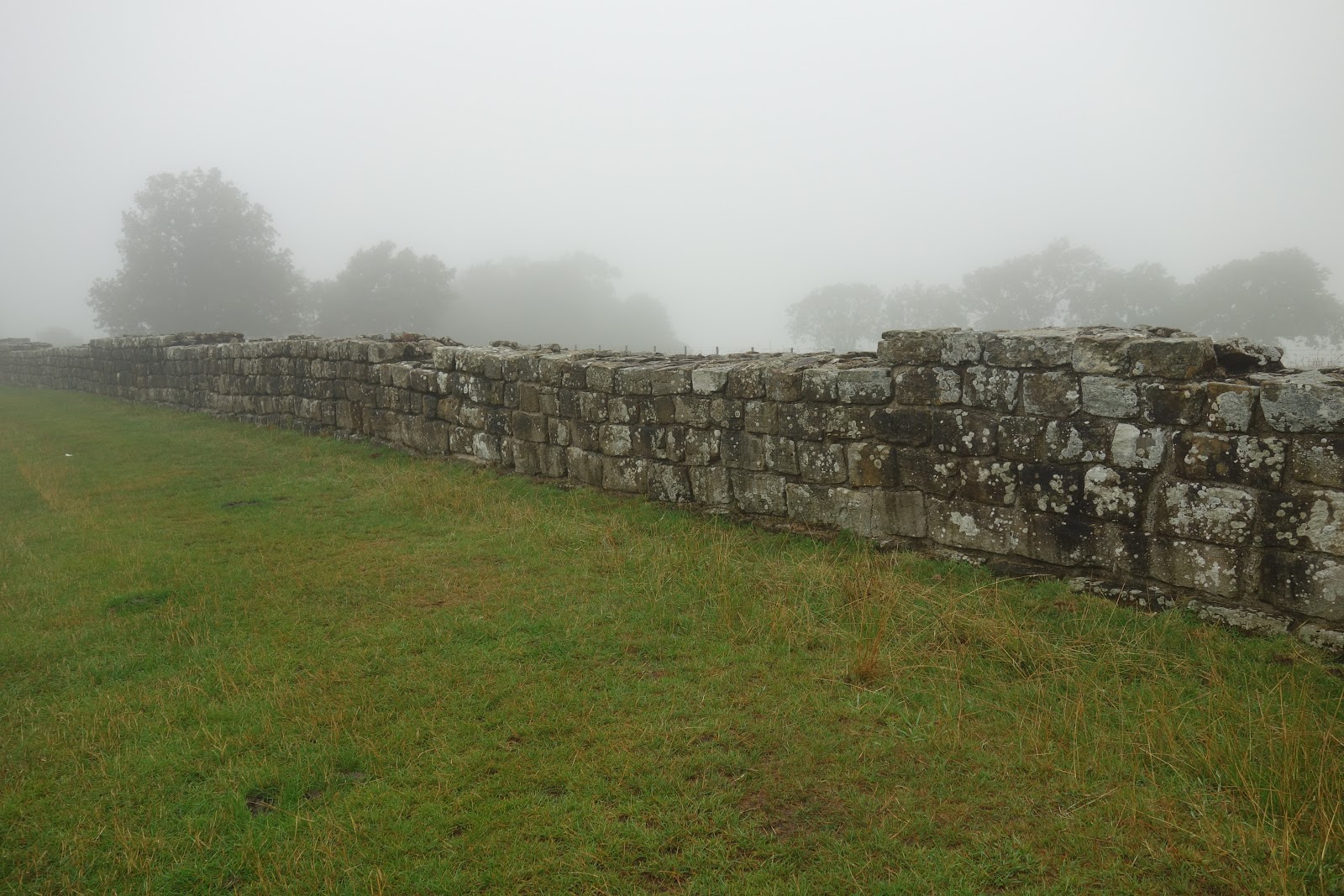
The sameness of the size and shape of the stones is remarkable. But, I did learn subsequently that parts of the wall were first constructed of turf and then wood and when it was all stone…..who knows? But what I would like to know is how the stones were schlepped there and whence they came. (Same question regarding castles, cathedrals, forts and so on.)
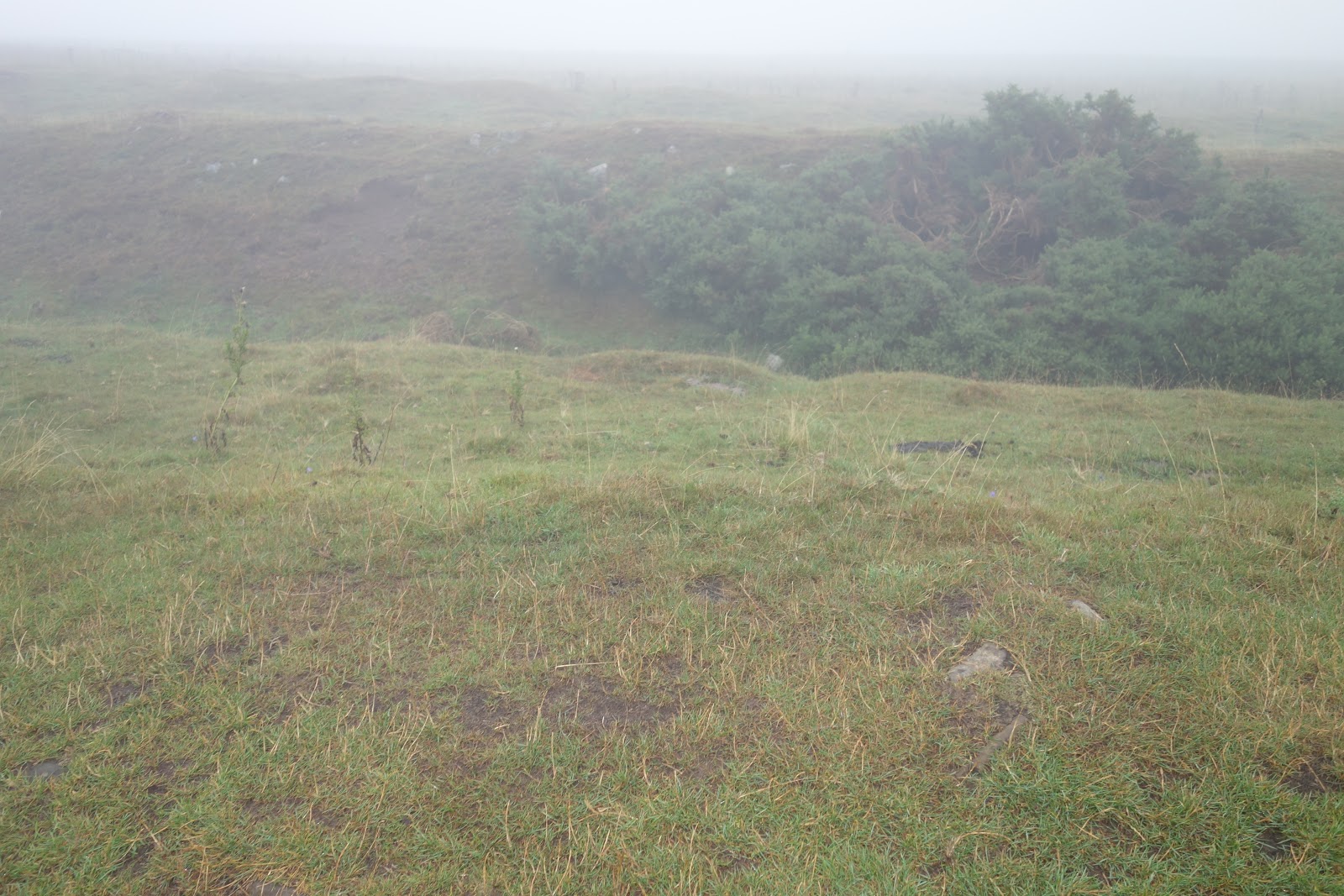
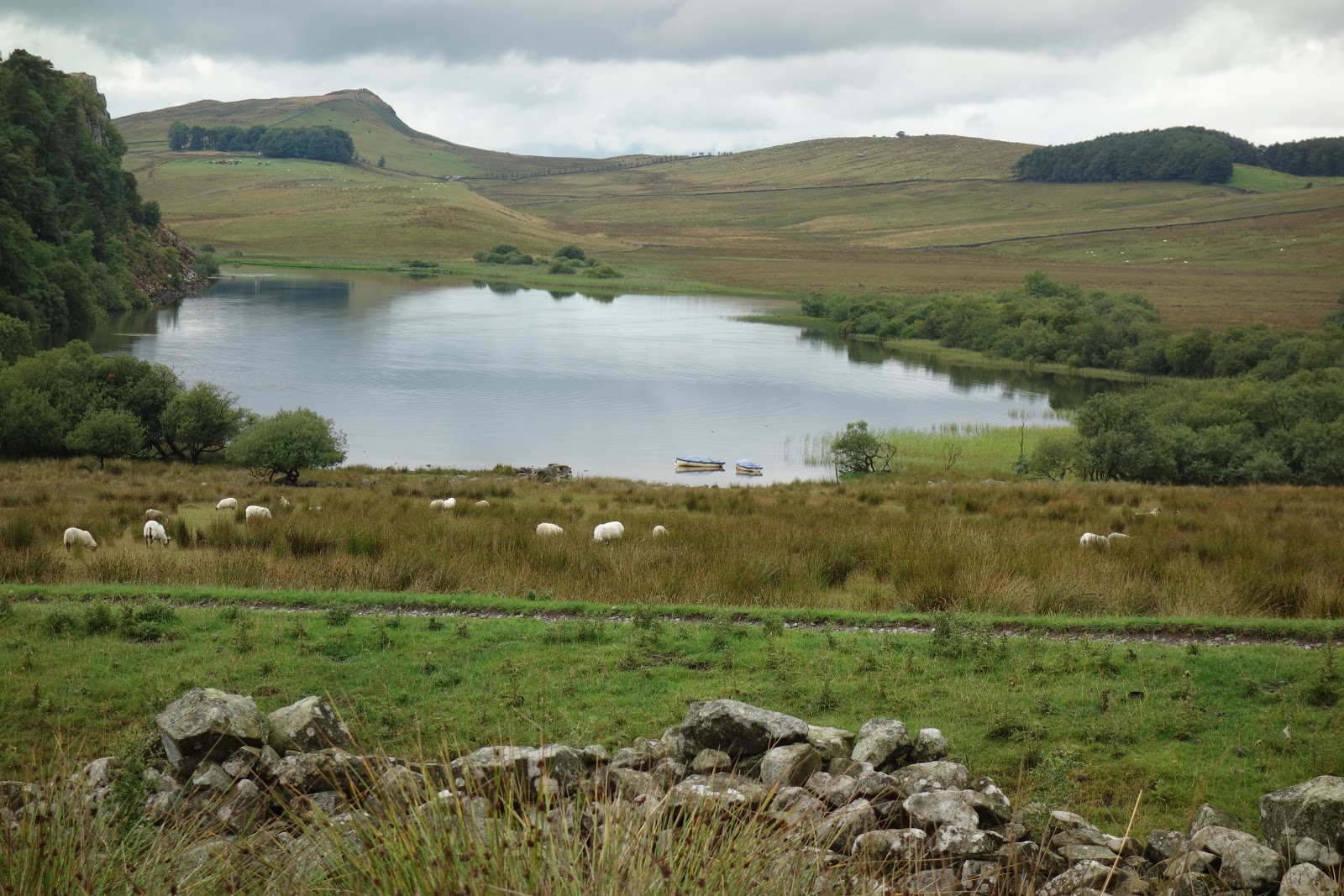
Sometimes there is no wall, it having fallen into disrepair and its stones looted, perhaps for other projects, but there is a ditch:
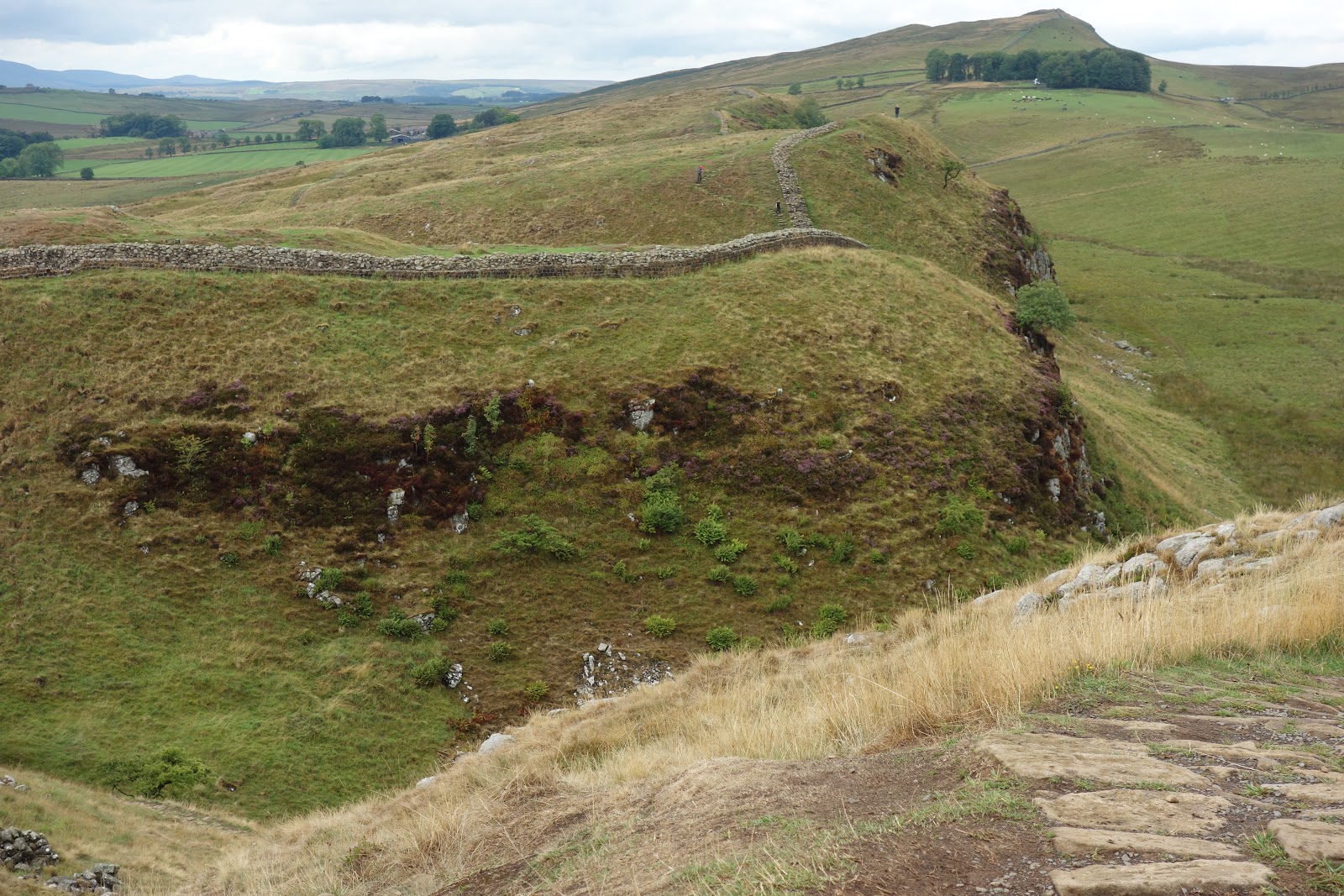
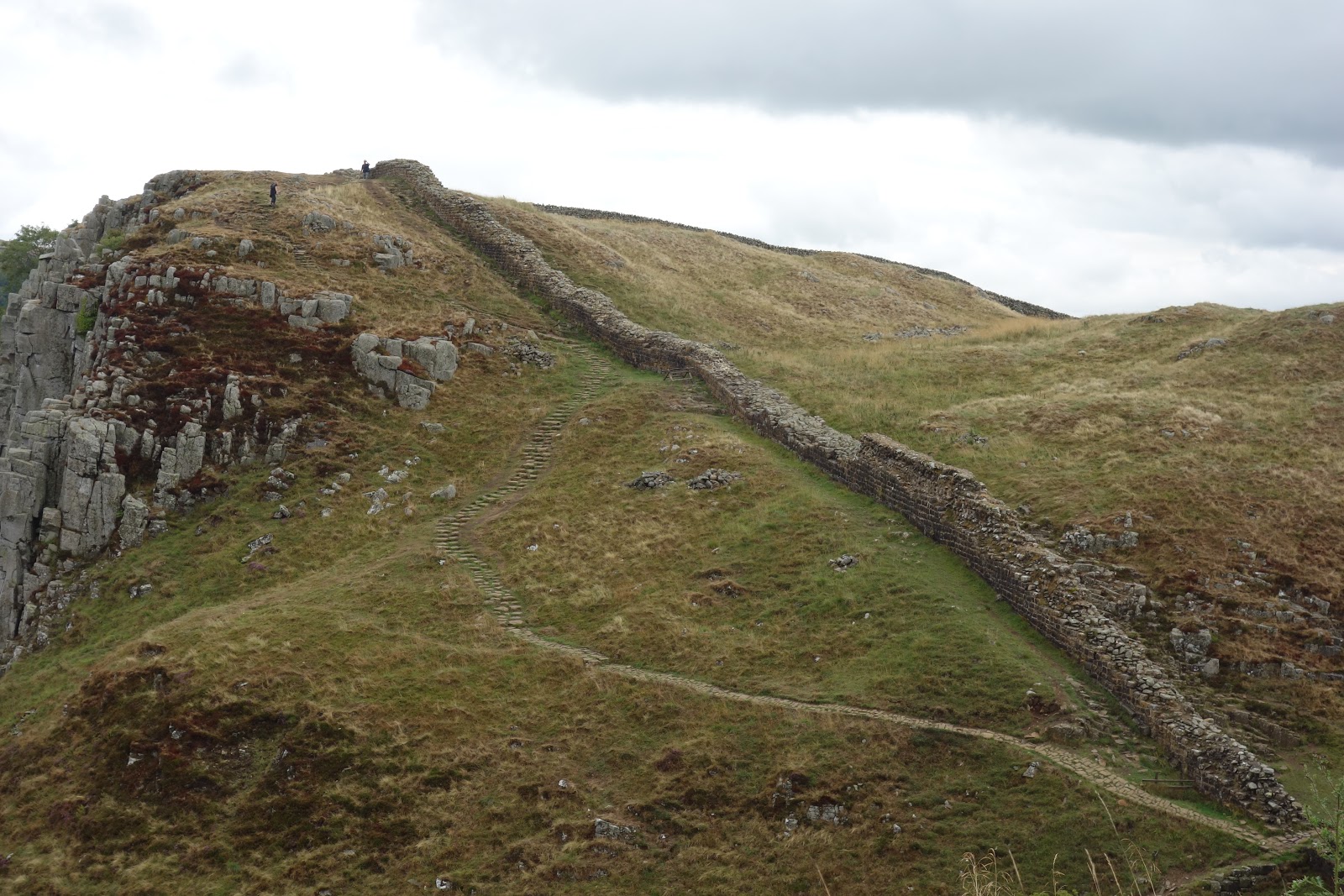
In places, the wall twists and, from a distance, looks graceful:
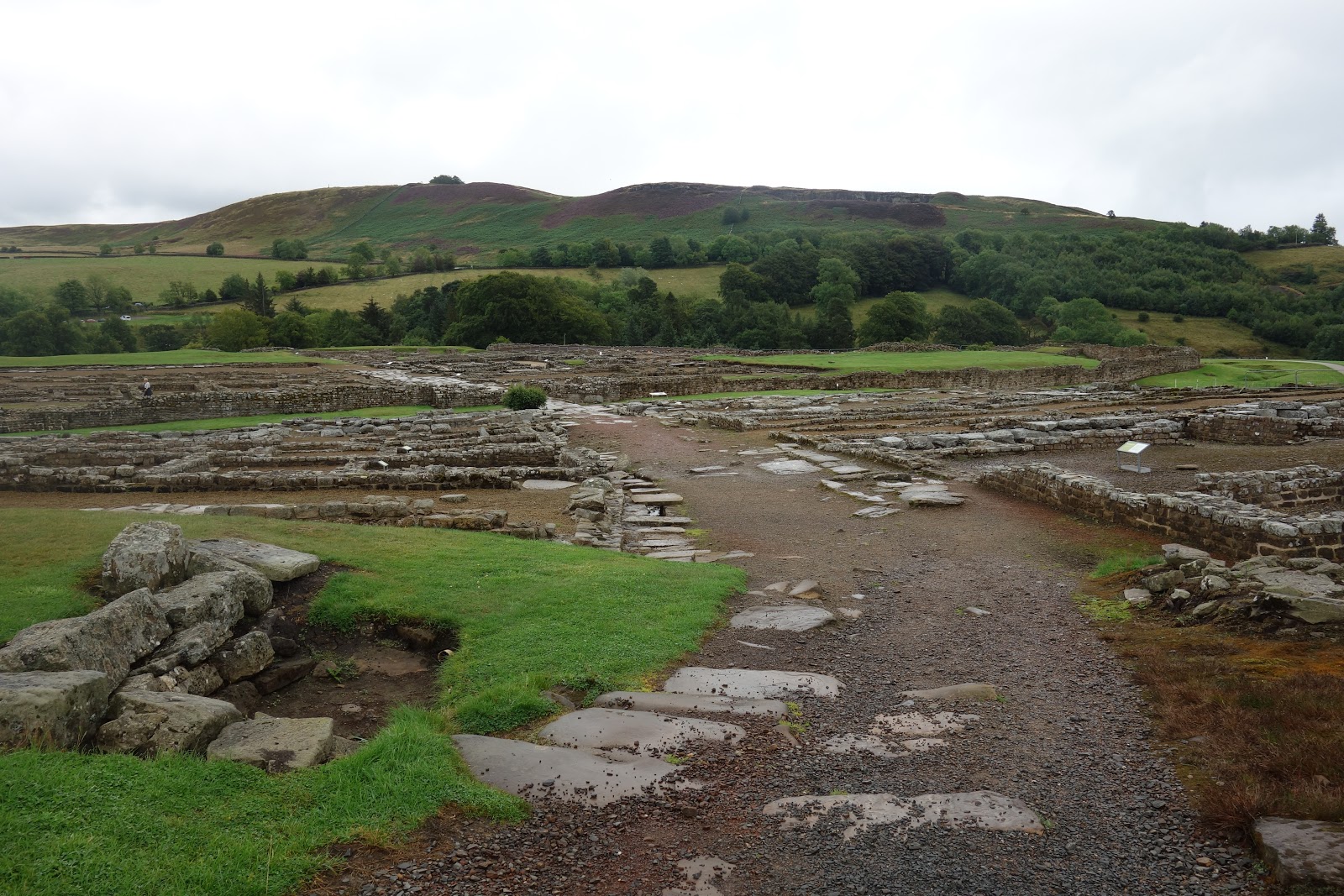
I was not thrilled that I had scheduled a rest day to see some of the highly touted sites like Vindolanda, but had I not gone, I would have agonised over what I had missed. So I obediently went off to Vindolanda, which, if you are going to visit one archeological site, is the one not to miss as it is large, has a decent museum, and the setting is lovely.
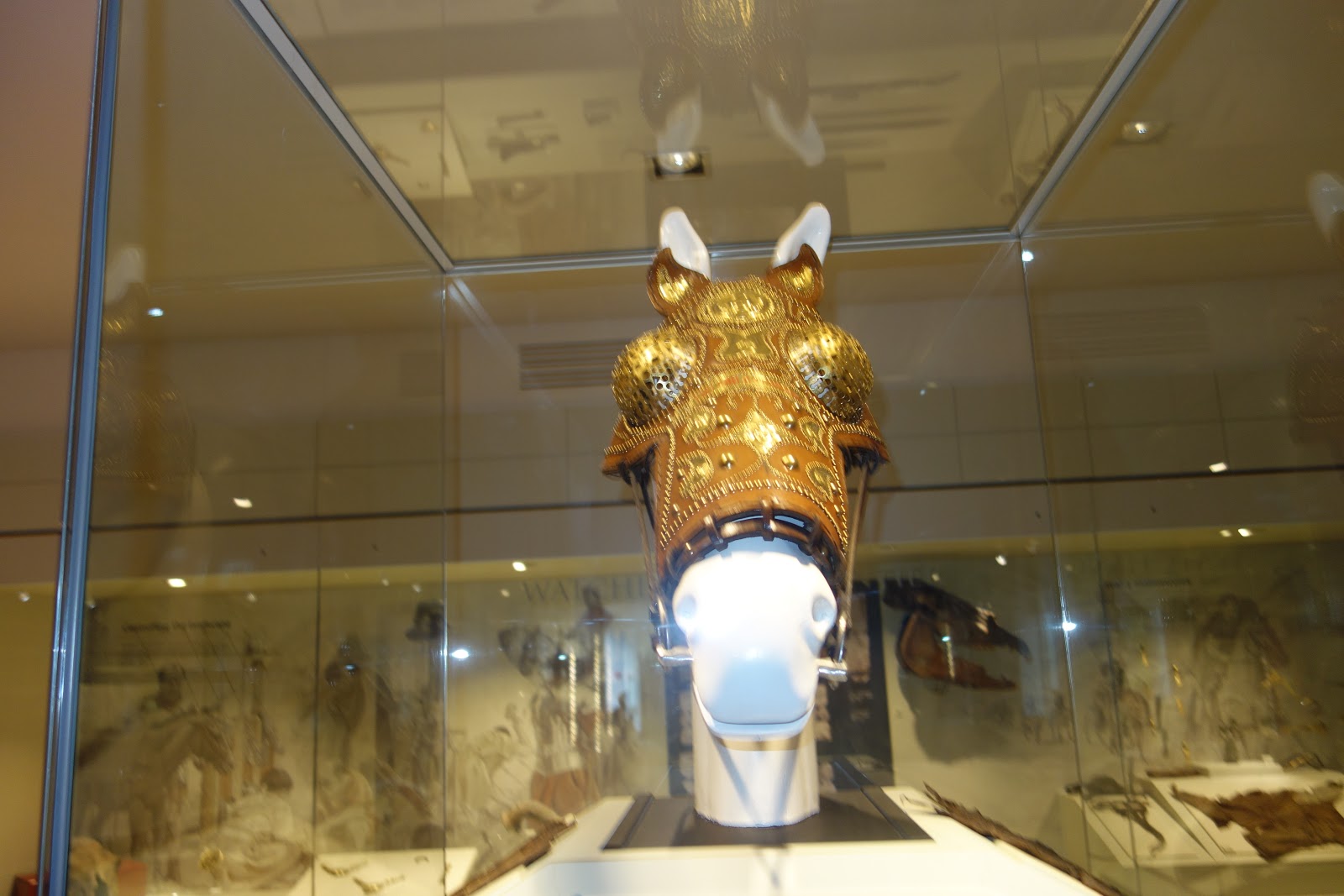
Imagined face guard for horse:
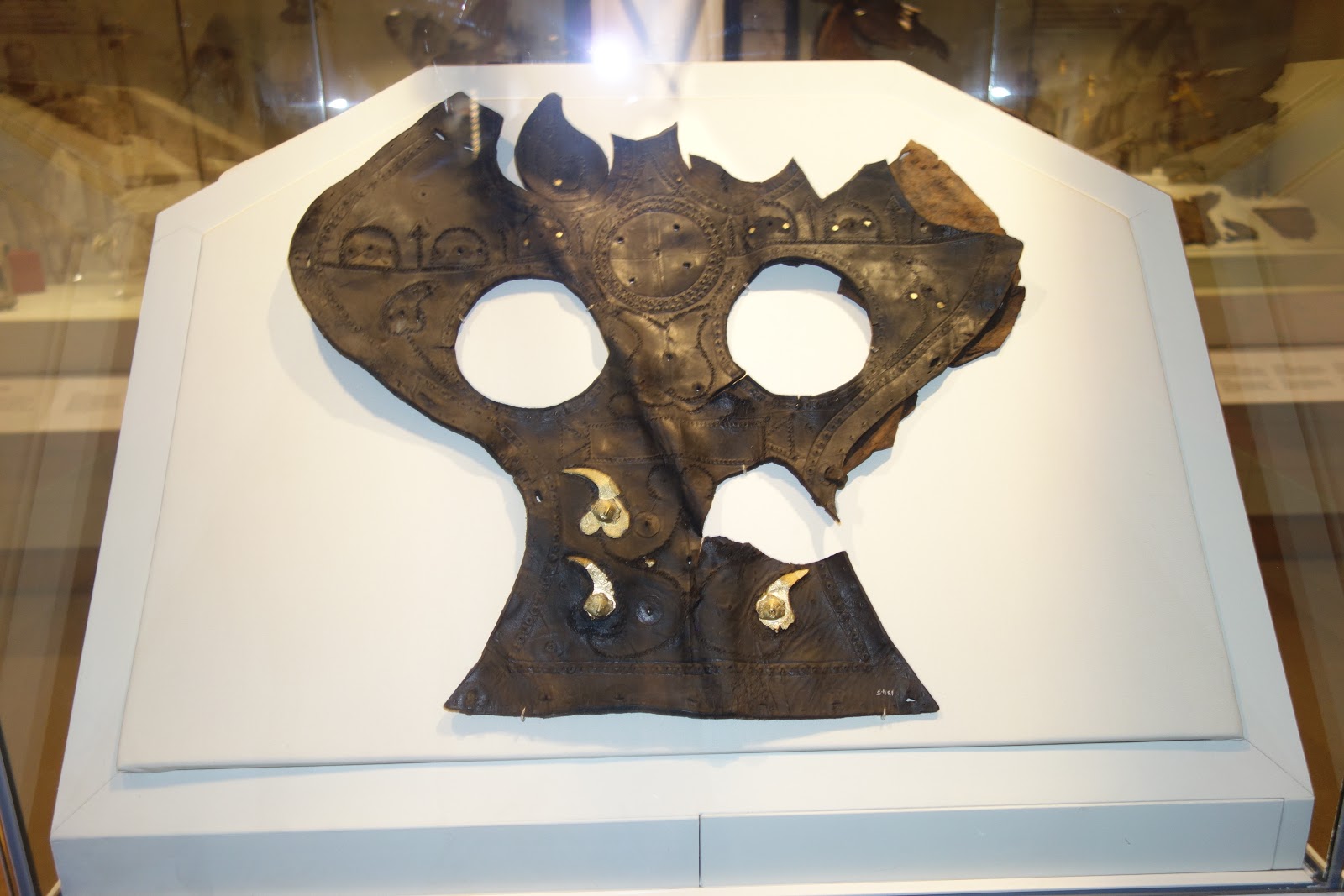
Actual remnant:
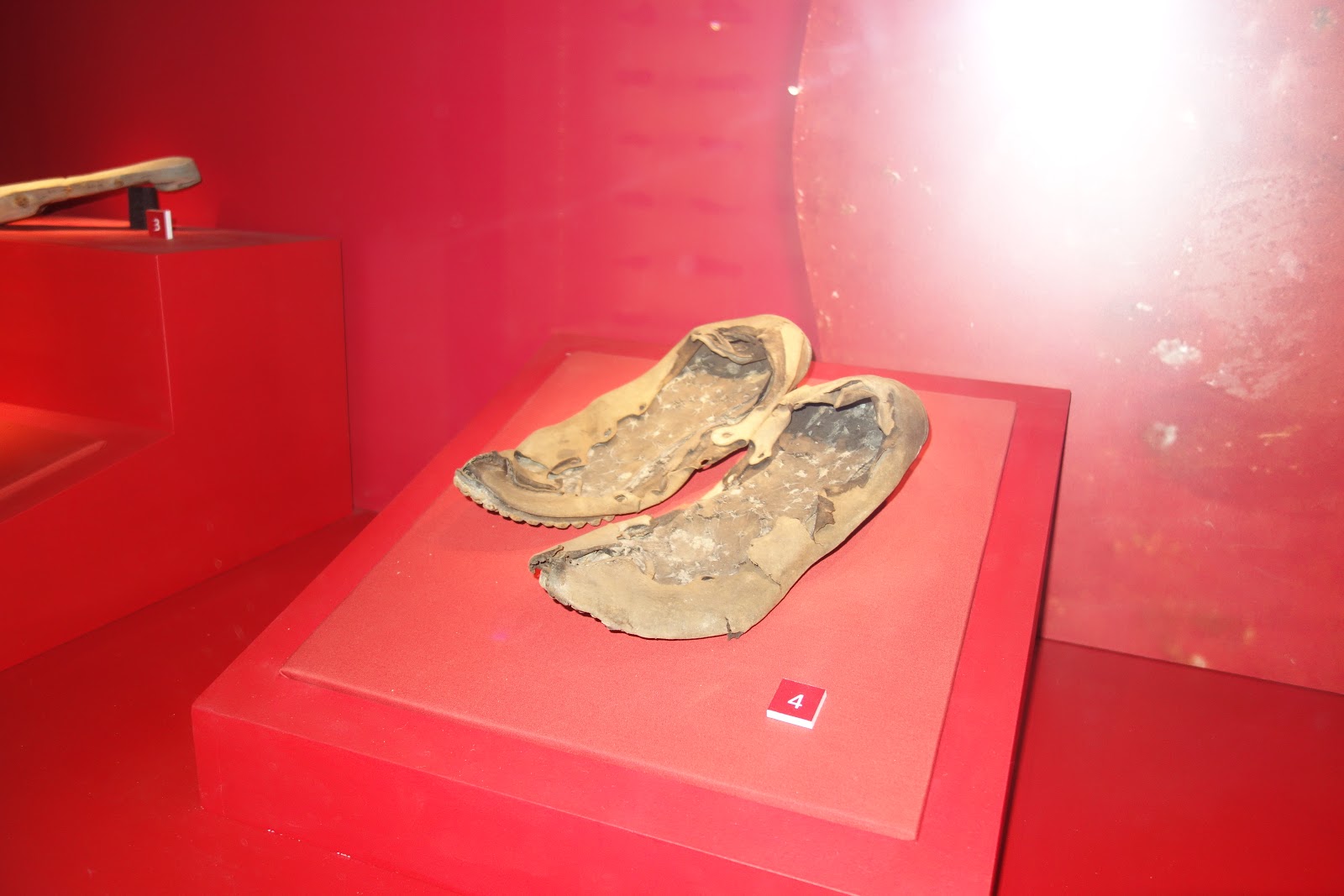
How advanced was this? Some soles even had a tread!
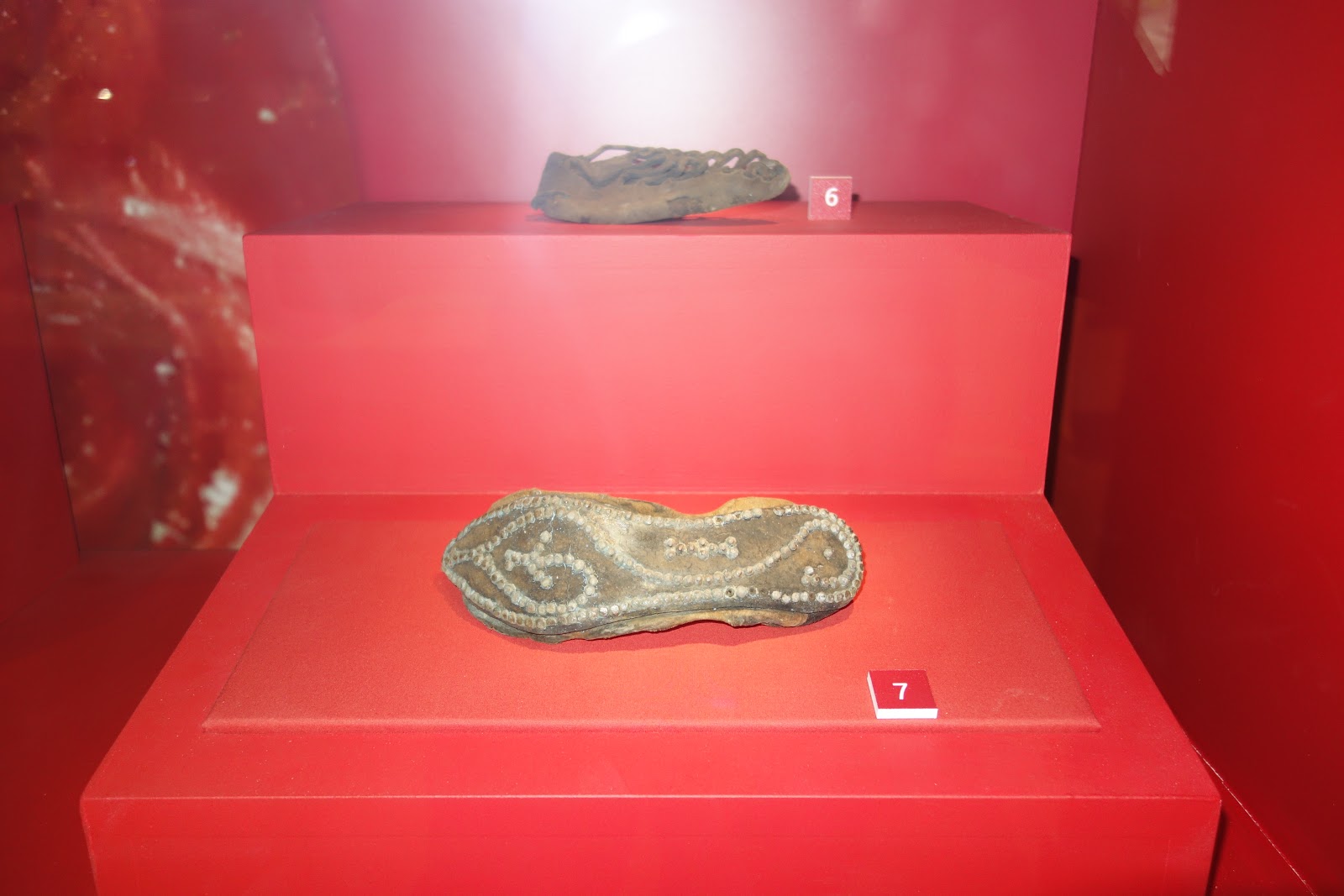
And there were little kiddie shoes:
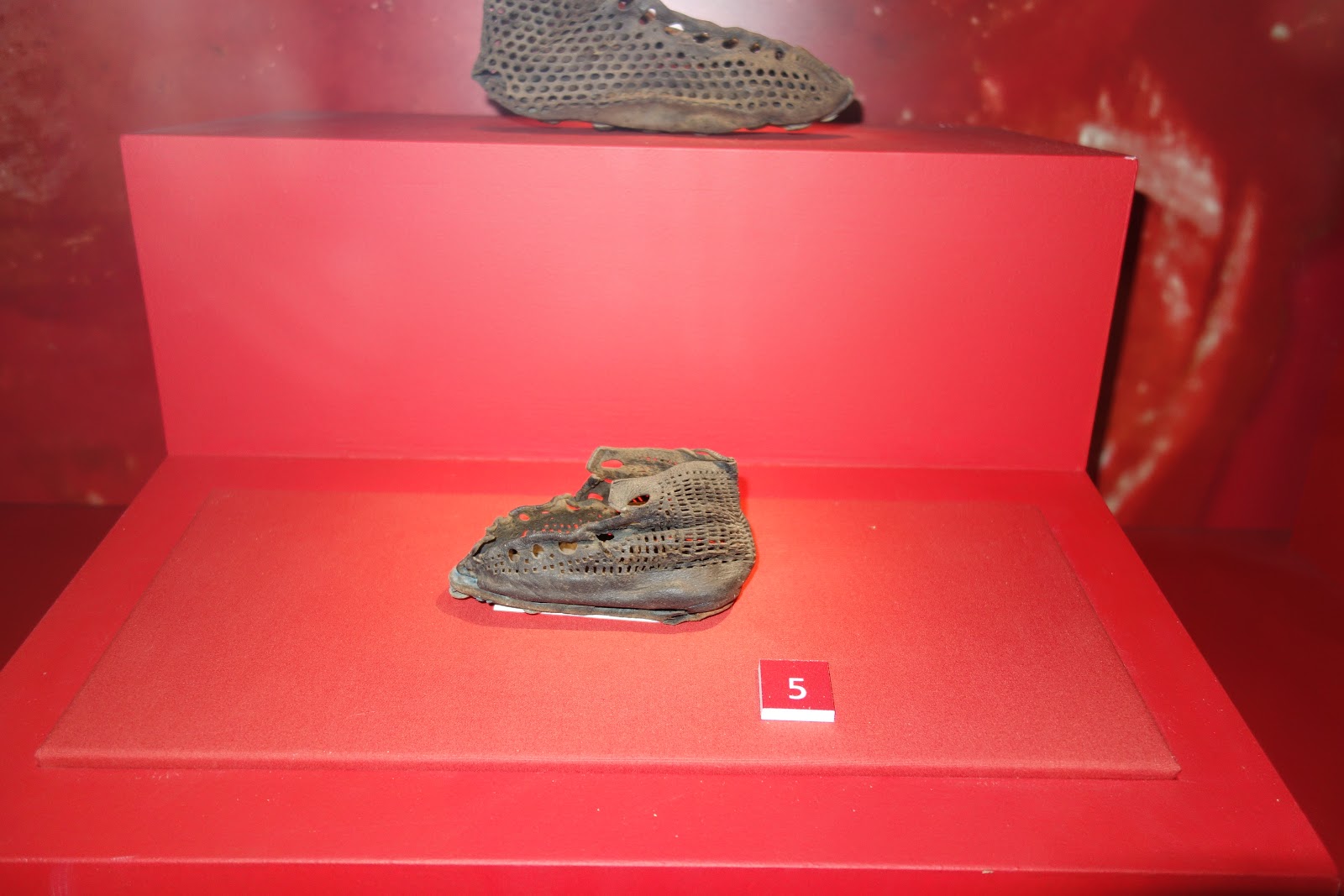
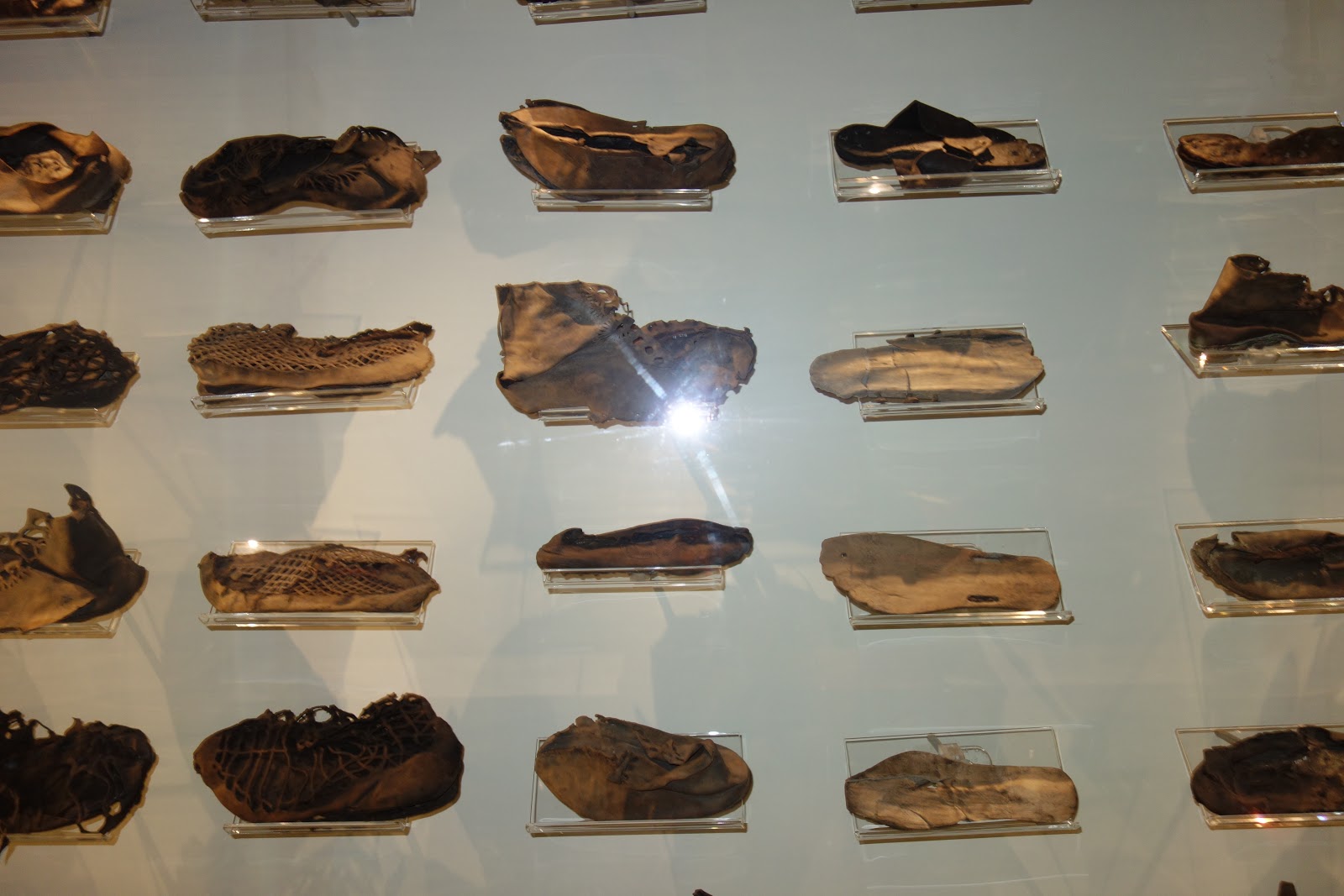
Then off to the Roman Military Museum from which I really expected to emerge an expert in all things militarily Roman. They had a 3D movie, mostly of the wall, so it was fun to see, in 3D, where I had walked. Then I learned, or was reminded, that after 25 years of service, an auxiliary—a (conquered) foreigner compelled to serve the empire—could become a citizen and have a wife and a plot of land that his children (?) could inherit. Great perk except the likelihood of a soldier surviving 25 years was, shall we say, slim. The museum was small: 90% hype, 10 % substance.
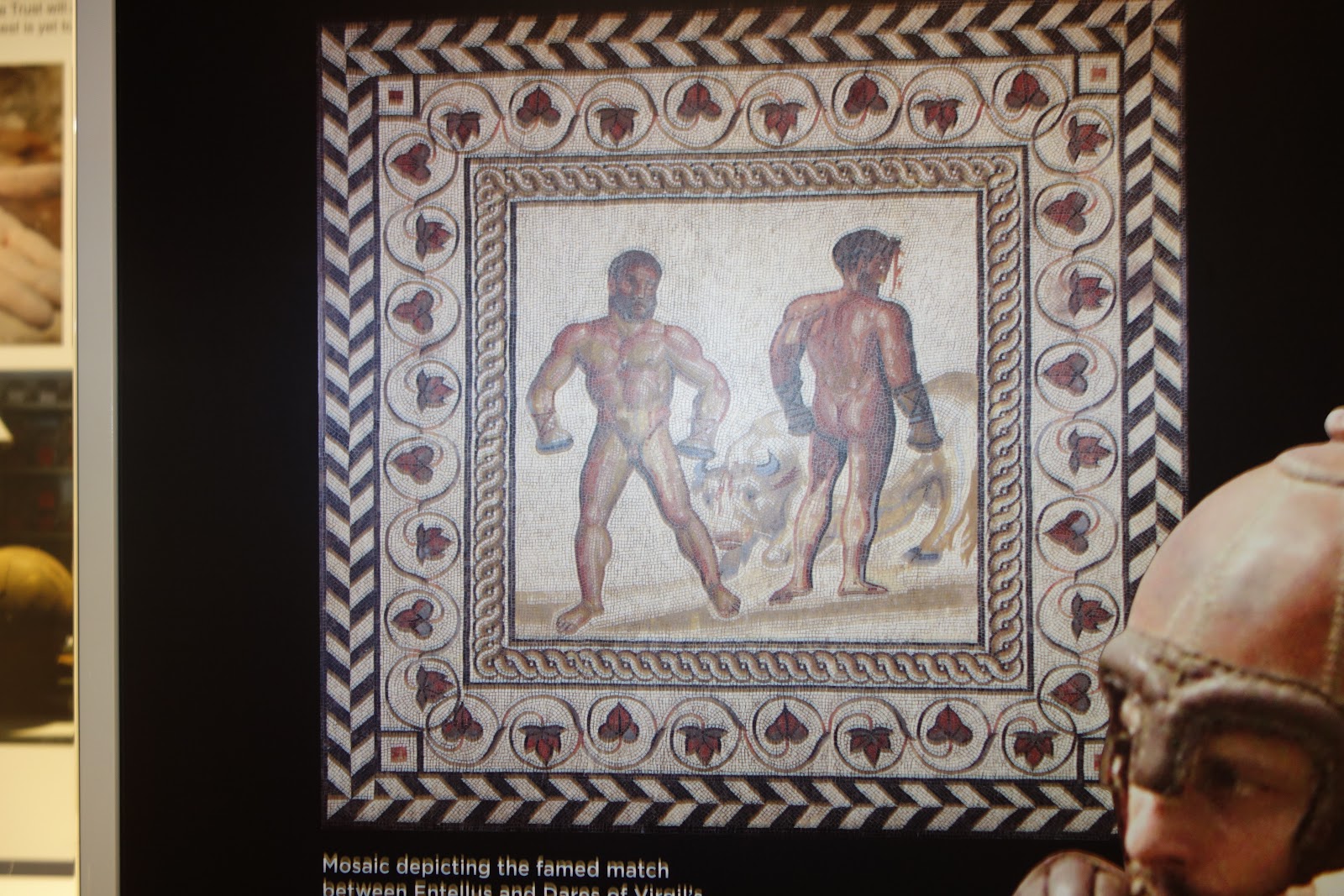
Oh, I did learn about boxing. This is what I learned: “Ancient boxing was a straightforward fight between two opponents regardless of weight and without bouts or breaks. The winner either knocked out his opponent or forced him to yield.
Sculptures showing the earliest boxers, from Mesopotamia and Egypt, suggest that bare fist fighting took place but through time the appearance of simple ‘gloves’ started to appear which were designed to protect the knuckles but also inflict damage on the opponent.
The Romans took the sport to a new and more lethal level by incorporating metal blades and inserts into the cutting edge of the gloves.”
A mosaic depicting the famous match between Entellus and Dares of Virgil’s Aeneid:
After the Military Museum I walked to Haltwhistle—yes, the train does stop there!—where there is a CoOp in order to buy supplies for dinner tonight and tomorrow. That three mile walk was the best part of the day!
 Grandma Goes Coastal